
A rare or genetic diagnosis can feel like the ground shifting under you. In the first 30 days, the most useful things you can do are simple: get the diagnosis in writing, connect with the one foundation or clinic that knows your child's condition, start one organized place for records and questions, and give yourself permission to move one step at a time. You do not have to figure out the next ten years this month. This guide walks through what actually matters in the first weeks, in the order it helps most.
Week 1: Get the basics in writing and breathe
- Ask for the diagnosis in writing, including the specific gene or variant if it is a genetic diagnosis. You will be asked for this again and again; having it saved means you never have to reconstruct it from memory.
- Write down who diagnosed it and how to reach them. This becomes the anchor contact for everything that follows.
- It is okay to not tell everyone yet. Share on your own timeline. The first week is for you and your child, not for updating everyone who asks.
Week 2: Find your people
- Find the foundation or advocacy group for your child's specific condition. For rare conditions there is often one organization that holds the best, most current family information. They can point you to specialists, other parents, and what to expect.
- Ask about a specialist or center of excellence. Many rare conditions have a handful of clinics in the country that see them regularly.
- Connect with one other parent who has walked this road. Practical, lived advice is different from anything a pamphlet gives you.
Week 3: Start one organized place
- Start a one-page summary: diagnosis, current medications, allergies, and key contacts. This is the page every new specialist wishes they had.
- Begin logging what you observe between appointments: symptoms, sleep, feeding, behaviors. These day-to-day notes are easy to forget by the time you get to the next visit.
- Keep a running question list so nothing gets lost before the next appointment.
Week 4: Prepare for the next appointment
- Gather your records from each provider's portal so you walk in with the full picture, not fragments.
- Bring your one-page summary and question list.
- Ask what to watch for and when to call. Knowing the red flags reduces the 2 a.m. uncertainty.
How CareGene helps in the first 30 days
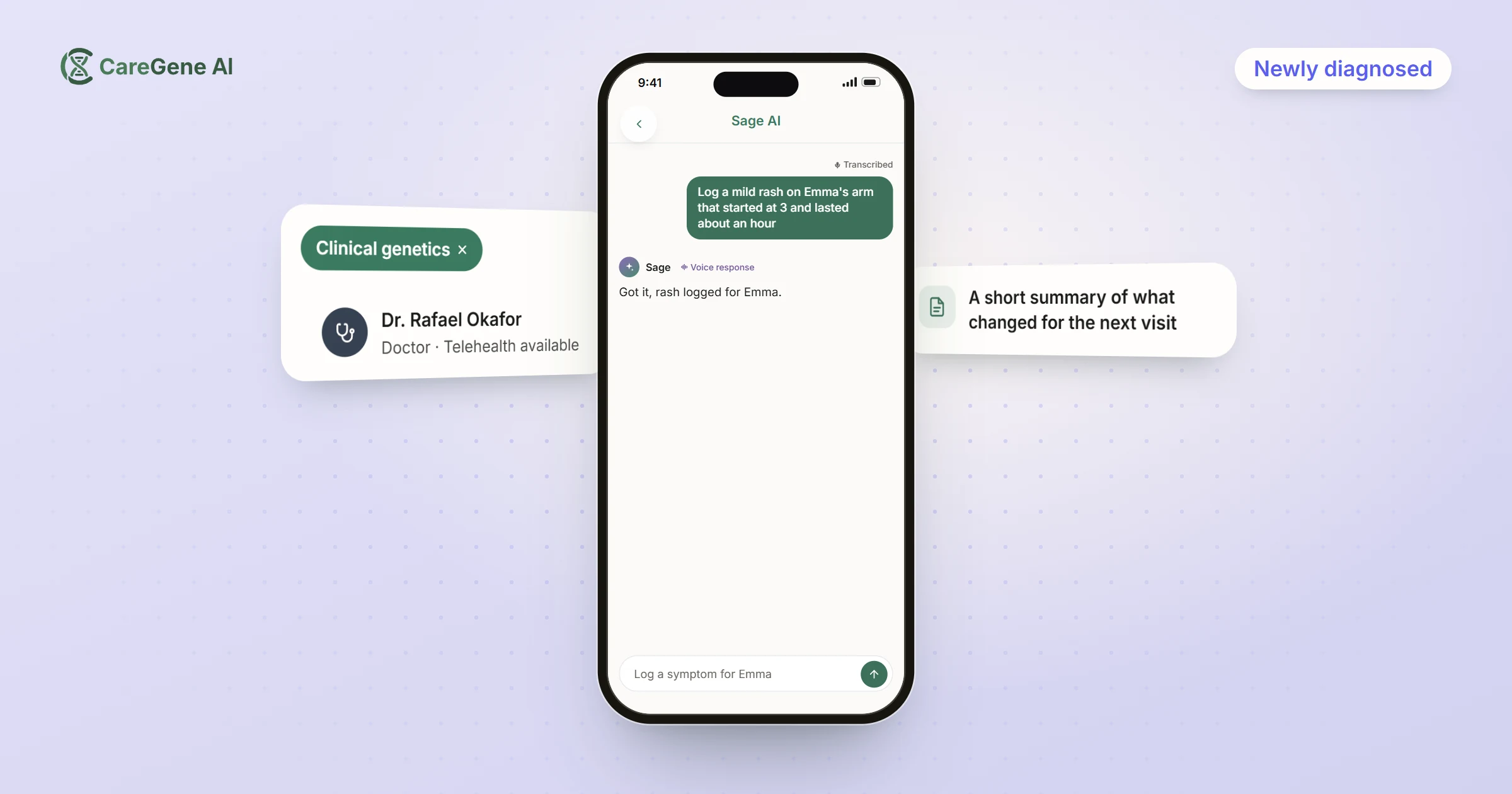
CareGene is an app built for parents of children with rare and complex conditions. You log symptoms by voice or text: say it once, and CareGene files it by date in your child's Diary. Ask about the last few weeks, and Sage, CareGene's AI assistant, answers from your own records and shows where it found it. Before a visit, you can bring a short summary of what changed. The summary gets better as you log; in the first days there may not be enough to summarize. Separately from Sage, you can search for specialists by condition. The search is a place to start, not a recommendation of any doctor. CareGene is free to download on the App Store for iPhone and iPad.
Download CareGene on the App Store
Frequently asked questions
What should I do first after my child's rare disease diagnosis?
Get the diagnosis in writing (including the specific gene or variant if genetic), note who diagnosed it and how to reach them, and find the foundation or specialist center for that specific condition. Then start one organized place for records, observations, and questions. You do not need to plan the whole journey in the first month.
How do I find a specialist for a rare condition?
Start with the advocacy foundation for your child's specific condition; they usually know which clinics or centers of excellence see it regularly. Your diagnosing doctor and other parents in the community are also good sources for referrals.
What information should I keep track of from the start?
Keep a one-page summary (diagnosis, medications, allergies, key contacts), copies of reports in date order, and a simple daily log of symptoms, sleep, feeding, and behaviors. Bring these notes to the next appointment.
How do I cope emotionally in the first weeks?
Move one step at a time and share news on your own timeline. Connecting with one other parent who has the same diagnosis often helps more than anything else early on. You do not have to have all the answers this month.
Have a question this guide didn't answer? Contact the team.
Last updated