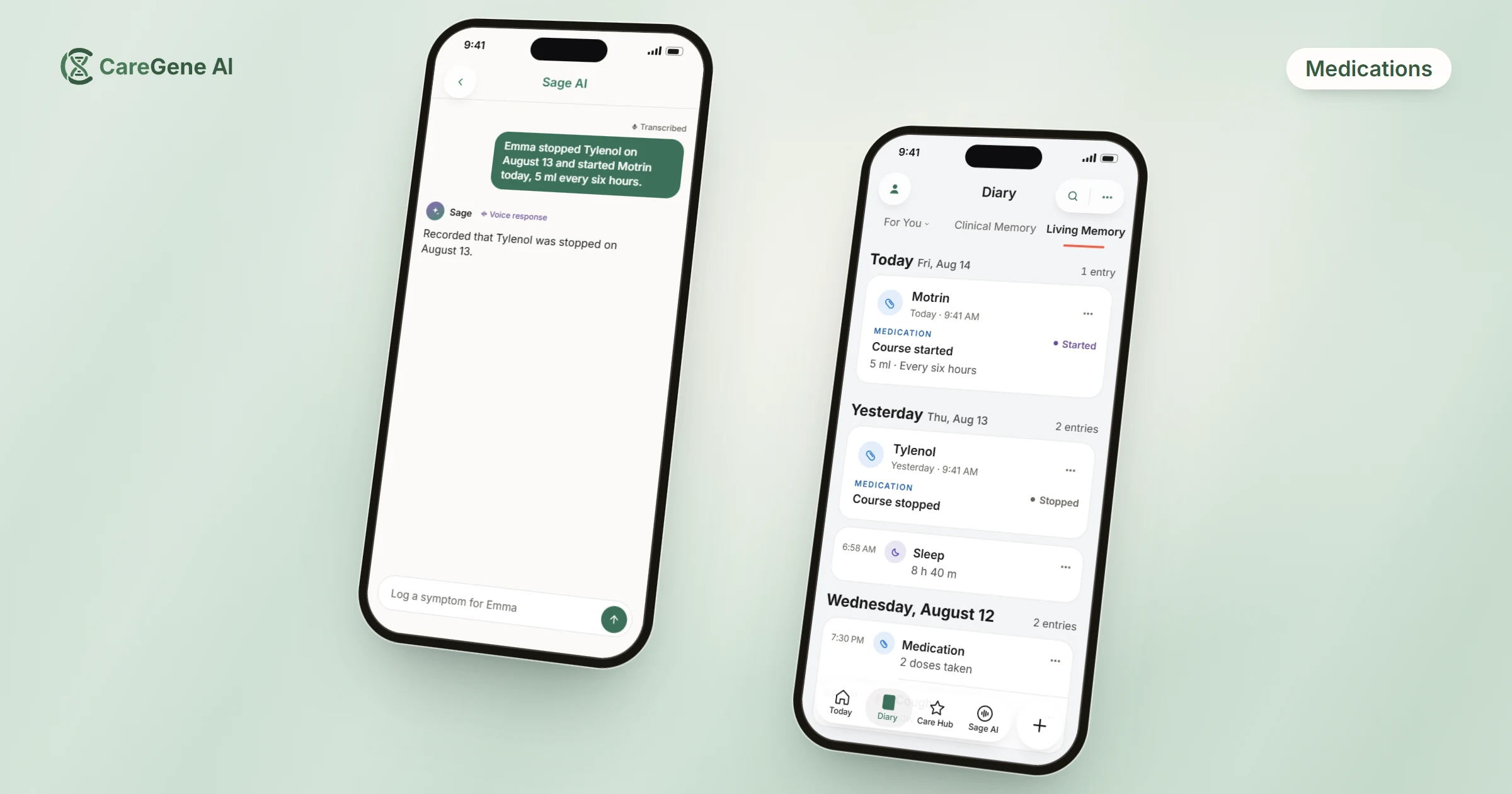

The most reliable way to keep track of your child's medications is to keep one current list that shows each medicine, its dose, the schedule, and why it was prescribed, and to log any changes as they happen. For a child with complex medical needs, diagnosed or not, who takes several medications, this list does two jobs: it helps you avoid missed or double doses at home, and it gives every doctor a current picture quickly. This guide covers what to include, how to build a system you will actually keep up, and where an app can help.
Why medication tracking matters more when care is complex
A child with complex needs, diagnosed or still being worked up, may take several medications, sometimes from different specialists who each adjust their own. Doses change, new medicines get added, and some get stopped because they did not help. Without one current record, it is easy to lose track of what your child is actually taking right now, and doctors end up working from an incomplete or outdated list. A good medication record keeps everyone, including you at 2 a.m., working from the same picture.
What to include in a medication record
- Every current medication with its exact name (brand and generic if you know both).
- The dose and how it is given (amount, form, route).
- The schedule (times of day, with or without food).
- Why it was prescribed and by which specialist.
- Start date and, for anything stopped, the stop date and the reason.
- Allergies and past reactions so any new prescriber sees them immediately.
- Refill info so you never run out unexpectedly.
How to build a medication system that holds up
- List everything your child currently takes
Include prescriptions, over-the-counter medicines, vitamins, and supplements. Doctors need the full picture, not just prescriptions. - Write down the "why" for each
Knowing the reason helps you and every new doctor understand the plan, and helps you ask better questions. - Log every change as it happens
A dose increase, a new medicine, a stop. Changes are the details that get forgotten and that doctors most need. - Keep it with you
The list only helps if it is available at appointments, in the ER, and at the pharmacy. - Review it before each visit
Bring the current list and flag anything that is not working so the specialist can adjust.
Common ways parents track medications (and the trade-offs)
- A written chart or notebook: Free and simple, but easy to leave at home and quick to fall out of date after a change.
- A phone note or spreadsheet: Always with you, but manual to keep current and not built to share cleanly with a doctor.
- An app: Travels on your phone, and some let you log by voice. Check any health app's privacy practices before adding your child's information.
Keeping the daily log in CareGene
In CareGene, you can log a dose given or a symptom by voice or text. Say it once, and CareGene files it by date in your child's Diary. You can also see today's doses in one place. CareGene is free to download on the App Store for iPhone and iPad.
Download CareGene on the App Store
Frequently asked questions
What is the best way to keep track of my child's medications?
Keep one current list showing each medication, its dose, the schedule, and why it was prescribed, and log every change as it happens. Include prescriptions, over-the-counter medicines, vitamins, and supplements. Keep the list with you so it is available at appointments, the pharmacy, and the ER.
What information should a medication list include?
Each medication's name (brand and generic), dose and how it is given, schedule, the reason it was prescribed and by whom, start date, and stop date and reason for anything discontinued. Include allergies and past reactions so any new prescriber sees them right away.
How do I keep a medication list up to date when doses keep changing?
Log each change the moment it happens rather than trying to remember later. A dose increase, a new medicine, or a stopped medicine are exactly the details that get forgotten and that doctors most need.
Should I track over-the-counter medicines and supplements too?
Yes. Doctors need the full picture, so include over-the-counter medicines, vitamins, and supplements alongside prescriptions.
Have a question this guide didn't answer? Contact the team.
Last updated